BBC:
The pattern has now become wearily familiar in Nigeria.
Many die in a boat accident; officials say the regulations should be followed; their calls are ignored; campaigners say the resources are not available; another tragedy happens.
This time, a search-and-rescue team is looking for survivors of a capsized wooden canoe in Jigawa state.
Forty were thought to be on board, mostly female farmers and labourers, when it sank on Sunday. Seven bodies have been recovered so far.
Last month, a boat accident on the River Benue in central Nigeria claimed the lives of 12 people, including a pregnant woman and six children.
Earlier this year, 14 people lost their lives when their boat capsized in Gumbi, Kebbi state. They had been returning from a wedding ceremony, accompanying the bride to her new husband’s home.
So far this year, more than 55 people have already lost their lives in boat accidents, with dozens of bodies yet to be recovered.
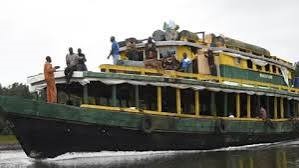
For millions of Nigerians, particularly in rural areas, rivers are the most practical means of transport. With many villages on or close to waterways and few bridges and poor roads to aid travel, rickety wooden boats are often the only way for people to reach family members elsewhere, to take goods to market, or to see the outside world.
For people like Isiyaka Bello, the painful memory of losing someone to water is still fresh. Last year, his wife was returning from a village market in Kebbi state when she and eight others lost their lives.
“It seems like just yesterday. She left behind four children, and I am still struggling to adjust to raising them on my own.
“Whenever I pass by a large body of water, all I think about is her,” he said.
The reasons why water transport in Nigeria is so risky are painfully predictable:
- Overcrowding
- Unsafe boats
- Failure to enforce basic safety rules like wearing life jackets.
After every disaster, authorities promise to do better. But on the water there is little, if any, change.
Mallam Sala Altine holds a traditional title that carries the weight of life and death on the river. He is the Sarkin Ruwan Shiroro – the man entrusted with keeping people safe on the Shiroro Lake in Niger state, where some of Nigeria’s deadliest boat tragedies have occurred.
The River Niger, the third-longest in Africa, passes through the state with which it shares a name, where it is fed by numerous smaller rivers and connected waterways, creating an environment where fatal accidents are both frequent and severe.