BBC News:
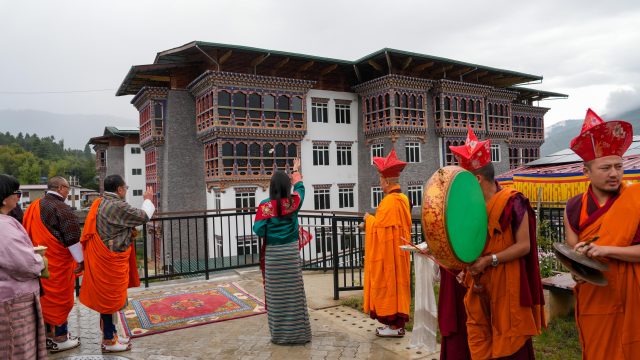
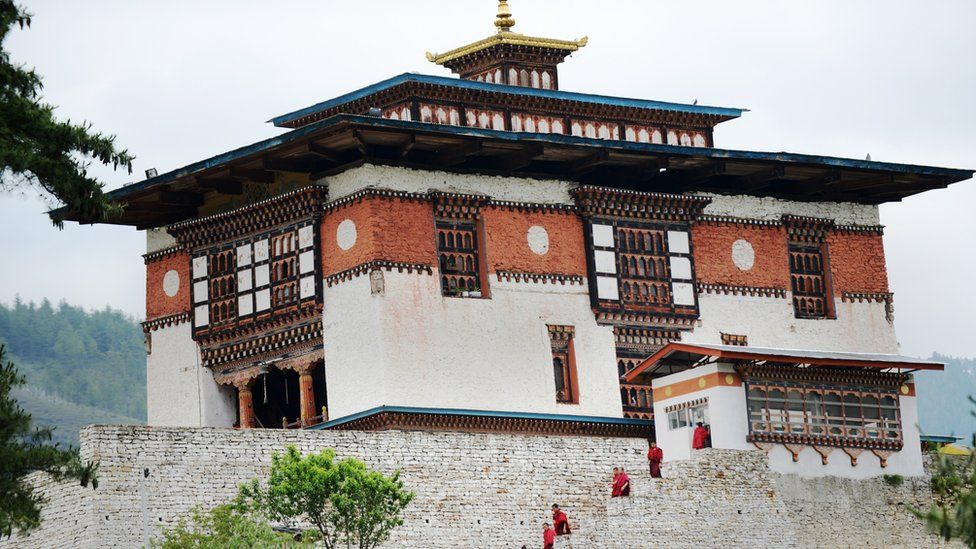
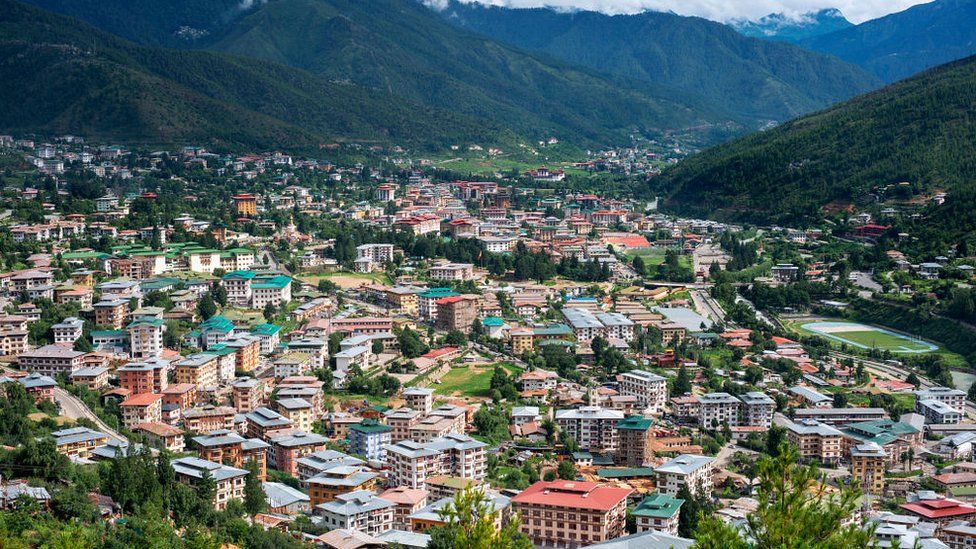
Bhutan is a tiny and remote kingdom nestling in the Himalayas between its powerful neighbours, India and China.
Almost completely cut off for centuries, it has tried to let in some aspects of the outside world while fiercely guarding its ancient traditions.
The Bhutanese name for Bhutan, Druk Yul, means “Land of the Thunder Dragon” and it only began to open up to outsiders in the 1970s.
The Wangchuck hereditary monarchy has wielded power since 1907. But Bhutan became a two-party parliamentary democracy after elections in March 2008.
- Read more country profiles – Profiles by BBC Monitoring
KINGDOM OF BHUTAN: FACTS
- Capital: Thimphu
- Area: 38,394 sq km
- Population: 777,400
- Language: Dzongkha
- Life expectancy: 68 years (men) 71 years (women)
LEADERS
Head of state: King Jigme Khesar Namgyel Wangchuck
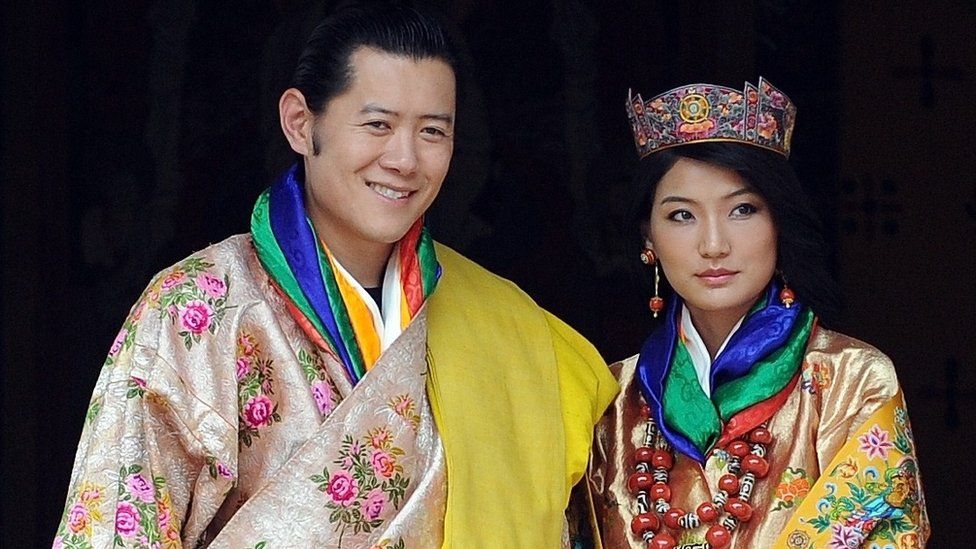
Jigme Khesar Namgyel Wangchuck succeeded his father, Jigme Singye Wangchuck, in December 2006 after the former monarch announced his abdication.
His predecessor had already given up some of his absolute powers in 1998 and ruled in conjunction with the government, an assembly and a royal advisory council.
Prime minister: Lotay Tshering
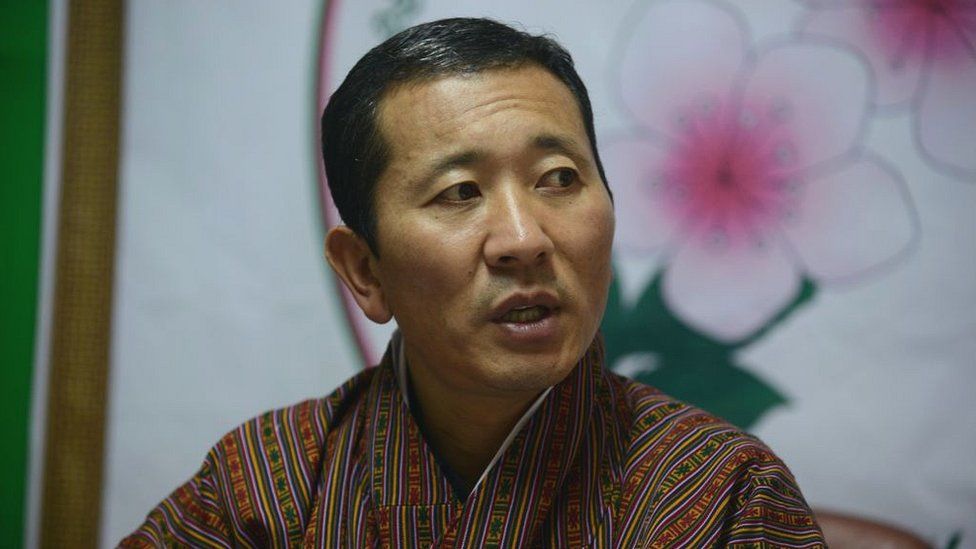
Lotay Tshering has been Bhutan’s prime minister since the November 2018 national assembly elections, when his Bhutan United Party won the majority of the seats, defeating the governing People’s Democratic Party of Prime Minister Tshering Tobgay.
MEDIA
Television did not come to Bhutan until 1999. For years, the country cut itself off, fearing that outside influences would undermine its monarchy and culture.
Radio broadcasting began in 1973 and the internet arrived in 1999.
TIMELINE
Some key dates in the history of Bhutan:
1720 – Chinese imperial army invades and temporarily establishes control over Bhutan.
1772-73 – British intervention.
1864-65 – Further intervention by Britain.
1907 – Ugyen Wangchuck is chosen as hereditary ruler.
1910 – Treaty giving Britain control over foreign relations.
1949 – Treaty signed with newly-independent India guaranteeing non-interference in Bhutan’s internal affairs, but allowing Delhi influence over foreign relations.
1958 – Slavery abolished.
1974 – First foreign tourists allowed in.
1988 – Census leads to branding of many ethnic Nepalis as illegal immigrants. Government also introduces other measures to stress Tibetan-based Bhutanese culture, antagonising minority ethnic Nepali community.
1990 – Violent ethnic unrest and anti-government protests in southern Bhutan pressing for greater democracy and respect for Nepali rights. Thousands of ethnic Nepalis flee to Nepal.
1998 – King cedes some powers to national assembly.
1999 – Limited television and internet services allowed; several dozen political prisoners released.
2007 – Bhutan signs a landmark agreement with India which revises ties with its neighbour, giving Bhutan more say over its foreign and defence policies.
2013 – Prime Minister Tshering Tobgay says Bhutan’s much lauded concept of Gross National Happiness is overused and masks real problems such as increasing debt, chronic unemployment, poverty and corruption.
- Bhutan to raise tourist numbers
- 15 September 2010
- Bhutan experiments with democracy
- 25 March 2008
Related Internet Links
The BBC is not responsible for the content of external sites.