CNN News:
At least 16 people have died from heat-related illnesses in South Korea as the country swelters under a prolonged heat wave with temperatures above 38 degrees Celsius (100 Fahrenheit) in some parts of the country.
The deaths, which have all happened since May, far exceed those over the same period last year, when six people died from heat-related illnesses, the Korea Disease Control and Prevention Agency (KDCA) said Wednesday.
A total of 1,284 people reported suffering heat-related illnesses as of Tuesday, according to KDCA.
South Korea has raised the heat wave warning to the highest “serious” level for the first time since 2019, the interior and safety ministry said Wednesday.
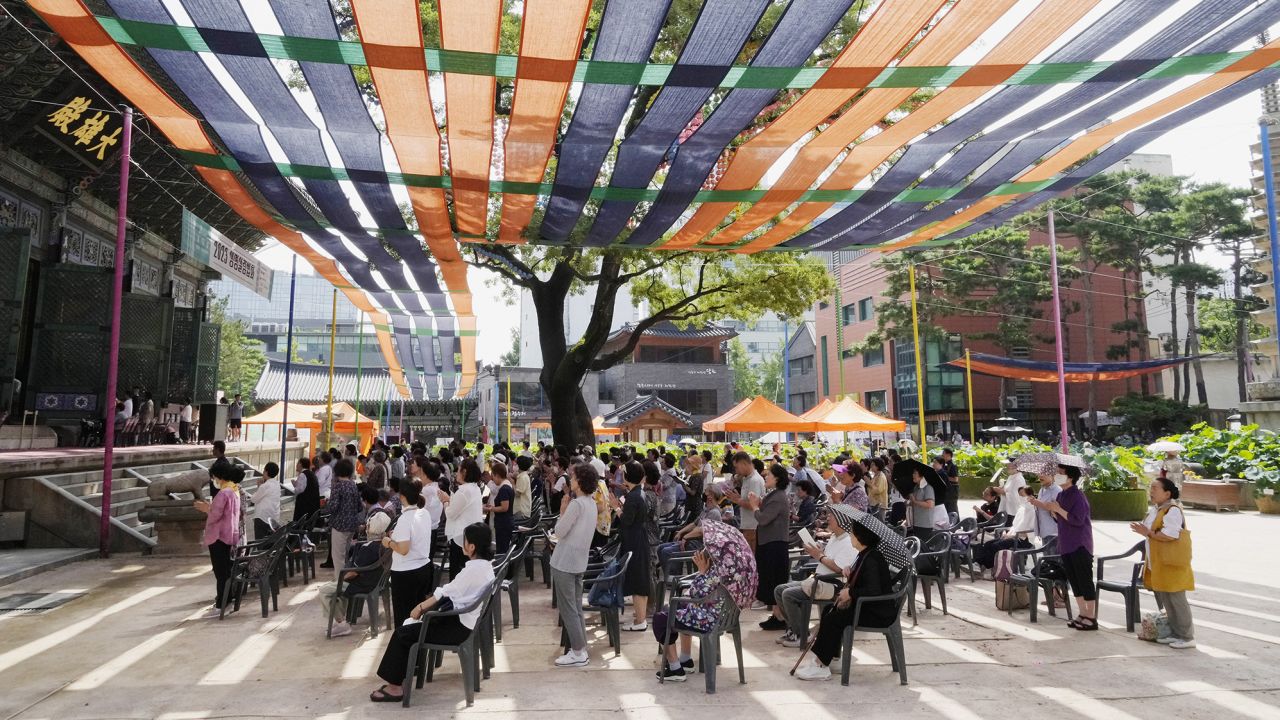
People pray under a sunshade to avoid the heat at the Chogye temple in Seoul on Wednesday.Ahn Young-joon/AP
Heat wave warnings have expanded to most of the country since late July as temperatures rose over 33 degrees Celsius (around 91 Fahrenheit).
On Tuesday, the highest temperatures of the day were reported Gyeonggi Province’s Yeoju city with 38.4 degrees Celsius (101.1 Fahrenheit), and Anseong city 38.2 degree Celsius (100.8 Fahrenheit), according to the interior and safety ministry.
To cope with the continuing heat wave, local authorities are regularly checking on vulnerable populations and setting up cooling facilities such as shade tents and sun umbrella rentals.
There are also fears for the health of outdoor workers, who are particularly exposed to the high temperatures. “Under the current conditions, construction workers’ heat deaths are ‘expected deaths,’” the Korean Confederation of Trade Unions said in a statement, according to a Reuters report.
Extreme weather has devastated large parts of Asia this summer. Parts of China and Japan have faced both blistering heat waves and torrential rains, causing landslides and flash flooding.
Scientists are clear that the human-caused climate crisis is making extreme weather both more frequent and more intense.