BBC:
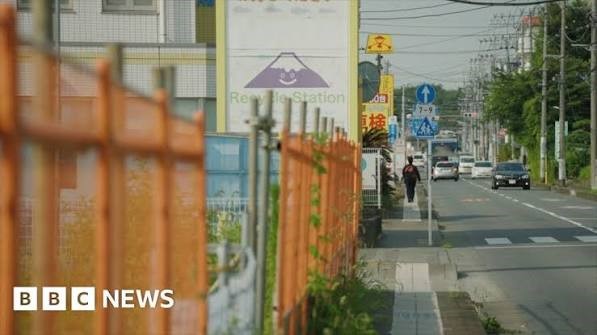
Today, it’s a field of grass. But soon, it’ll be the site of the first mosque in this Japanese town.
“It makes me worry about how our community might change,” says long-time resident Noriko Izumizawa.
Plans to build an Islamic religious site in Fujisawa, a laid-back seaside town about an hour’s drive south of Tokyo, have sparked a wide range of emotions.
There is anger and fear, as well as hope and acceptance, exposing the growing anxieties over immigration and social change as Japan grapples with a labour shortage from a shrinking and ageing population.
Although immigration remains politically sensitive and restrictive, Japan is increasingly relying on foreign workers to fill open jobs. That means an influx of immigrants with various cultures, languages, religions and ways of being.
So the debate that is playing out in towns like Fujisawa across the country is one that goes to the heart of how Japan sees itself.
Izumizawa is not alone in the way she feels. She is among a group of Fujisawa residents who are anxious about the increasingly visible Muslim community. She says that the polarising debates around immigration in the US and Europe have also contributed to her unease.
Earlier this year, anti-mosque protests flared up at the local train station, where thousands took to the streets to object to the proposed construction of the mosque. Some argue that a mosque much larger than the nearby Japanese Shinto shrine is disrespectful.
There have also been reports of hate speech and misinformation spreading on Japanese social media. Local outlets say mosques have been receiving abusive phone calls and emails, some of which has prompted anti-hate groups to organise counter protests calling for no hate.
Hiroki Suzuka, who manages a coffee shop opposite the road where the Fujisawa mosque is set to be built, calls for greater understanding and dialogue.
“I’m not particularly opposed, but I wouldn’t say I’m strongly in favour either,” Suzuka said.
“I think the first step is to learn about them, what Islam is, what kind of people they are, and what values and perspectives they hold. It begins with having an open mind and a desire to understand each other.”