BBC:
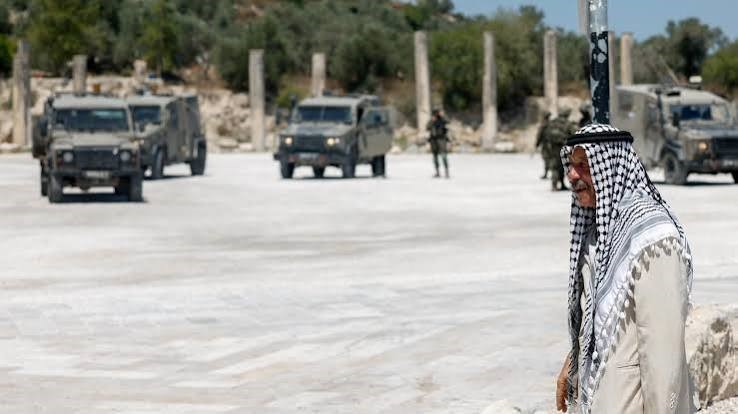
Up in the hills above the Roman columns of the ancient site of Sebastia, in the occupied West Bank, are olive fields that have been cultivated for generations by Palestinian families.
One of the landowners, Abu Mudif, says he has received notification that his land is part of a tranche of about 450 acres that the Israeli authorities are taking possession of in order, they say, to protect and develop the site for a major new national park.
Typically, Palestinian landowners receive little or no payment for such land expropriation. And even when it is offered, most refuse it as they see accepting it as giving recognition and legitimacy to the loss of what they see as their patrimony.
It’s a vital income for Abu Mudif to lose of course, but it goes deeper than that for him.
“If I wanted to describe it, the closest description I can give is that it is like having your soul ripped away. I cannot imagine myself without my land.”
Nahed Sakha owns a local restaurant that is under threat of demolition.
He says the Israeli plan seems to be to cut Palestinian residents off from the archaeological site, which dates back thousands of years and has significant remains from the ancient Jewish past, as well as many other eras including the Romans, the Crusaders and the Ottomans.
“Restoration work has now begun along with excavations,” he says. “Landowners were told that no-one would be allowed to use or plough their land.”
The concerns of the village that surrounds Sebastia have been echoed by the United Nations culture and education agency, Unesco, which has now declared it not just a World Heritage Site but also added it to the List of World Heritage in Danger.
Unesco says that the main threat facing the site concerns what it calls the “planned expropriation and creation of the ‘Samaria’ (Shomron) national park, which could divide the property”.
Standing on a path between the entrance car park in Sebastia on one side – where the Roman-era forum once stood – and the columns of the basilica on the other, the village mayor, Mohammed Azem, looks down to his right at some rubbish left in the ruins.
He says locals are now worried about reaching down to clean the area as it might cause problems with Israeli security forces and settlers.
The path on which he stands divides the site between Area B of the West Bank – which is under Palestinian civil and Israeli security control – and Area C, which is under full Israeli civil and security control.
Last week, Israel allocated roughly 113 million shekels (£27.8m) to expanding its control over archaeological sites in the West Bank. Some projects involve sites in areas administered by the Palestinian Authority.