BBC:
The world’s fastest growing major economy is increasingly dependent on dole to keep its poorest people out of desperate poverty.
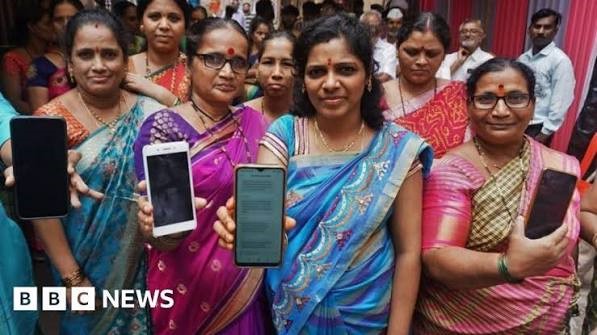
Over the past decade, government cash transfers, particularly directed at women and farmers, have emerged as a major welfare tool for poverty eradication in India.
Federal and state allocations for such schemes grew more than 20 times from under $2bn (£1.51bn) in 2015 to nearly $30bn, according to data from ProjectDEEP, an organisation that works on cash-based policies across the country.
They now constitute just under 1% of India’s GDP and over 10% of its social sector spending, and this growth outpaces spending increases on flagship social schemes that guarantee food security and employment.
The trend is widespread.
Seventeen out of 28 Indian states and one federally-administered territory – Delhi – now provide monthly cash transfers compared with a mere four in 2019, according to Crisil Intelligence.
Often derided as wasteful or a ploy to influence elections, direct transfers of cash could be emerging as a key tool to address two immediate economic challenges – weak household consumption and chronic unemployment, reports show.
The transfers range from 1,000 rupees ($10.5; £7.7) to 2,500 rupees per month, depending on the state. But a median cash transfer of 1,500 rupees per month could be covering 74% of monthly expenditure in rural areas and 51% in urban areas for the bottom 20% of households, making them a “new buffer for India’s household consumption”, Crisil Intelligence said in a recent report.
The money could particularly be a cushion at a time when “the economy sees inflation risks from high energy prices and the El Niño [weather phenomenon]”, according to Crisil.
While such transfers have so far mostly been directed towards women and farmers, a growing number of programmes are also focusing on unemployed youth.
According to ProjectDEEP, nearly 10 state governments, including India’s poorest state Bihar, have begun to offer money to young jobless men and women seeking work.
And most of these were launched in just the past three years.
“Unemployment is a particularly big question in India, with the rise of AI and climate shocks making income streams more uncertain. These schemes are typically designed to create bridge income,” Pankhuri Shah, co-founder of ProjectDEEP, told the BBC.
Despite being critical short-term buffers, there are growing anxieties about their growing fiscal cost.
India’s economic survey, an annual document presented by the government ahead of the budget, called them a “key driver” of fiscal stress for the states, saying half of those implementing such programmes have a revenue deficit.