BBC:
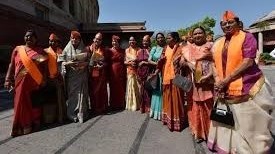
India is preparing for a once-in-a-generation redraw of its political map, driven by what the government says is a push to reserve one-third of seats for women in parliament and state assemblies.
To do that, the government will unveil a constitutional amendment – requiring a two-thirds majority – backed by a three-day special session from Thursday.
Women make up only about 14% of India’s 543 upper house MPs. The reform would raise that to roughly a third, closer to global norms.
Its rollout is now tied to a population-based redraw of constituencies based on the 2011 census – likely expanding the lower house from 543 to about 850 seats.
But this has fuelled controversy, with opposition parties accusing the government of rushing changes during an election season.
India already reserves 33% seats for women in village councils and municipal corporations in urban areas.
Prime Minister Narendra Modi has cast the Nari Shakti Vandan Adhiniyam (which loosely translates from Hindi to Saluting Women Power Act) as a historic leap – “among the most significant decisions of our times” – arguing it honours women’s empowerment.
He said parliament was poised to take one of the century’s “most important decisions”, noting the quota had unanimous backing and was meant to be implemented by 2029.
Opposition parties say a simple women’s quota is being tied to a controversial redraw of constituencies, turning a gender reform into a wider political overhaul.
“We support reserving 33% seats for women based on the current strength of parliament. We also want a further freeze on expanding overall seats in the parliament until population trends stabilise. We object to the haste in convening this session in the middle of an election season,” John Brittas, MP of the opposition Communist Party of India (Marxist), told the BBC.
India’s Constitution mandates that seats be allocated to each state based on its population, with constituencies of roughly equal size.
It requires periodic delimitation – the redrawing and reallocation of seats – after each census to reflect updated population figures.
So far, India has redrawn parliamentary seats three times based on the decennial census in 1951, 1961 and 1971. Since then, governments of all stripes paused the exercise, fearing an imbalance of representation due to varying fertility rates across states.
The Modi-led Bharatiya Janata Party (BJP) government has signalled a break from past caution, proposing a fresh delimitation based on the 2011 census.