BBC:
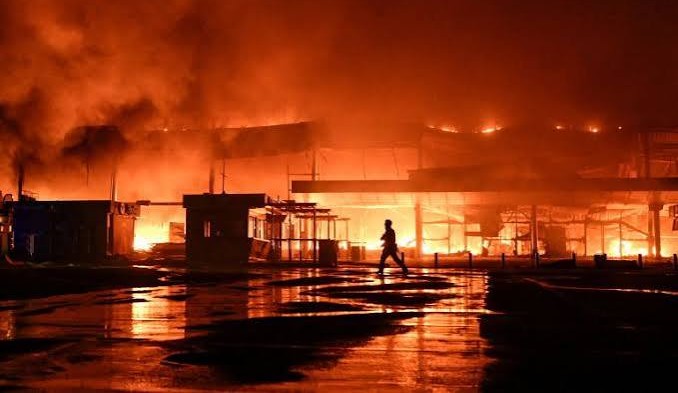
Global oil prices rose again on Thursday after three more cargo vessels were hit in the Gulf as strikes on shipping and energy infrastructure rattle markets.
Brent crude rose by over 9% in Asian trading to top $100 ($74.79) a barrel before the price eased to stand at about $97.50 in the afternoon.
The jump came despite the International Energy Agency (IEA) saying on Wednesday that it will release a record 400 million barrels of oil in an attempt to curb the economic impact of the US-Israel war with Iran.
The Strait of Hormuz, a key waterway for energy shipments, remains effectively closed over concerns that they could be attacked.
An Islamic Revolutionary Guard Corps (IRGC) spokesperson said on Wednesday that any vessel linked to the US, Israel or their allies will be targeted.
“You will not be able to artificially lower the price of oil. Expect oil at $200 per barrel,” they added.
“The price of oil depends on regional security, and you are the main source of insecurity in the region.”
The narrow shipping route is crucial to the global economy as about a fifth of the world’s energy supplies usually passes through it.
IEA members represent around two thirds of global energy production and consumption.
The release of reserves is more than double the previous IEA record, which came after Russia’s invasion of Ukraine in 2022.
The IEA’s decision is “historically significant” but is only a “temporary buffer”, said Martin Ma from the Singapore Institute of Technology.
Oil prices will stay high as long as there is a risk to supplies and latest jump suggests that traders are still expecting a “prolonged” disruption, he added.
Global oil markets have been extremely volatile since the US and Israel launched airstrikes against Iran on 28 February, with Brent crude reaching almost $120 a barrel earlier this week.
That has pushed up fuel prices have around world.
In the US, the average price of petrol rose above $3.50 a gallon on Tuesday, according to the American Automobile Association.
Many countries in Asia, which are heavily reliant on energy from the Middle East, have been hit particularly hard.
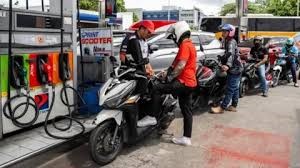
Long queues were seen at petrol stations in the Philippines,Thailand and Vietnam this week as people raced to fill up with fuel.
Thai authorities have called for staff at most government agencies to work from home to conserve energy. Officials are also being discouraged from non-essential overseas travel.
The Philippines has also started a four-day work week for its government to help cut down on energy use.