

BBC:
Two cargo ships have sunk near the Strait of Hormuz in the past 24 hours after being struck by unknown projectiles in separate incidents – highlighting the heightened danger to shipping as Iran steps up attacks in an attempt to regain control over the critical waterway.
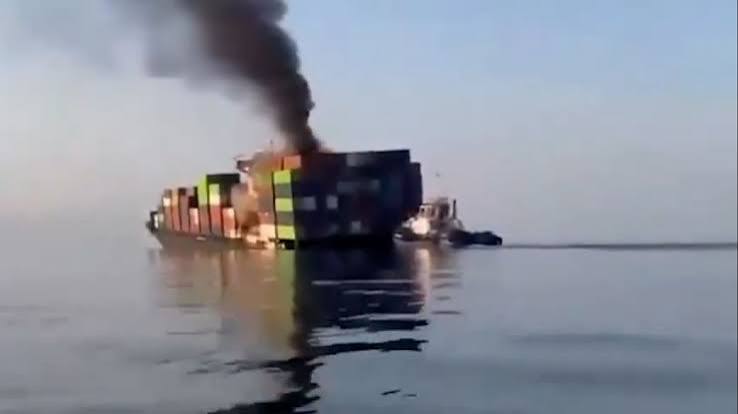
The Singapore-registered container ship GFS Pride was struck on Tuesday while passing through the strait, catching fire and later sinking, according to the Maritime and Port Authority of Singapore. All crew members were safely evacuated.
Videos verified by CNN show black smoke rising from the ship as it takes on water, while later footage and satellite images show cargo scattered in the water and a small oil slick. Iranian state media Press TV reported that the ship had “hit a sea mine on an unauthorized route” – which experts cast doubt on, saying a drone attack was more likely.
The merchant vessel Cape Dao, registered under Antigua and Barbuda, also sank, according to data from the International Maritime Organization (IMO) on Wednesday – after it was first hit by projectile on September 23. One Indian crew member was killed.
While many vessels have been hit in the Strait of Hormuz this year, these are only the second and third to have sunk in the Middle East since the Iran war began in February, according to IMO data. Attacks have ramped up significantly since the end of September, once again reducing the amount of oil transiting out of the Middle East and raising oil prices around the world.
That’s been a consistent headache for US President Donald Trump as the midterm elections approach, with gas prices, tariffs, and other factors driving up the cost of living top of mind for many voters.
Data from the United Kingdom Maritime Trade Operations (UKMTO), which monitors shipping incidents, shows just how high the risk is. Nine attacks in or near the Strait of Hormuz have been reported since Monday, including a drone strike on a tanker.
Only 4.147 million barrels of oil successfully transited the Strait of Hormuz on Monday – less than a quarter of pre-war levels, according to maritime data tracking service Kpler. And the seven-day average of oil flow through Hormuz has dropped sharply since early October, Kpler’s data shows.
“The sinking of Singapore-flagged GFS PRIDE marks a dangerous escalation after weeks of near-daily attacks on commercial shipping. Iran claims a naval mine; but a drone strike is more likely,” said former US Navy officer Charlie Brown, also a senior adviser for United Against Nuclear Iran, a nonprofit that tracks and reports on Iranian sanctions violations.


Leave a Reply